Problem
Buyers were hunting cars across five or six tabs: Marketplace, Craigslist, email, texts, a spreadsheet. Good cars sold before anyone answered, and nobody knew who was talking to which seller.
Most used cars reach a dealership through auctions or trade-ins. Vettx bets on a third door: buying directly from the people selling on Marketplace and Craigslist. That only works if a buyer can spot the right car, reach the seller, and close before the dealer across town does. I designed the product from scratch and built its design system. Then I led the UX team and, later, the whole product experience. Today 270+ dealerships across the US buy cars with it, and Vettx is the clear leader in private-party acquisition software.
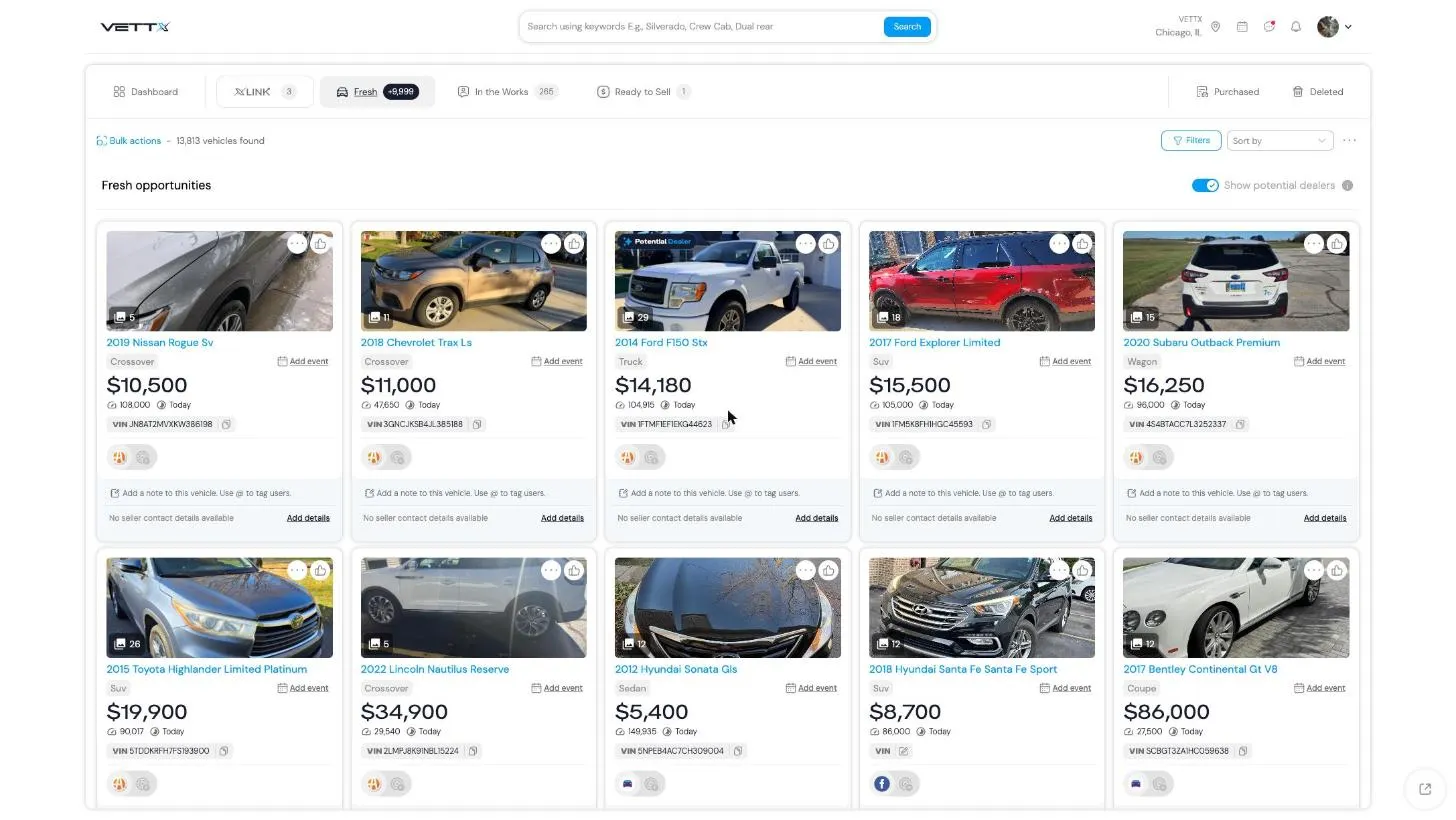
Buyers were hunting cars across five or six tabs: Marketplace, Craigslist, email, texts, a spreadsheet. Good cars sold before anyone answered, and nobody knew who was talking to which seller.
One place to find, contact, value and buy each car: a pipeline in the buyers' own words, one vehicle view that never changes shape, and an AI buyer that drafts replies but waits for a human.
270+ dealerships across the US run their daily buying routine inside Vettx, and the redesign shipped with usability metrics so it was measured, not just admired.
Most case studies cover a project. This one covers three jobs inside the same product, and each one changed what "doing design" meant.
Designed the whole product from zero and built its design system. Named the stages, shaped every core screen.
Led design, set usability metrics for V6, worked dealer pain points with sales and customer success, and as project manager ran initiatives with development squads, keeping delivery on track with agile methods.
Owned the product experience and managed delivery for a development team of about 15. Sprint delivery went from ~65% to ~100% of commitments, partly with a tool I built myself.
How do you help a dealer buy a car from a stranger, before the dealer across town does?
There was no "category leader" to copy. Auction software solves a different problem and CRMs assume the customer comes to you. So I leaned on:
A classic CRM would have called them leads, opportunities and deals. Buyers don't talk like that. On the floor a car is fresh, then it's in the works, then it's ready, then it's bought. I used their words as the navigation, so the product felt familiar on day one.
Try it: move the truck through the stages.
 Potential dealer
Fresh. Pulled from Marketplace minutes ago. The buyer decides in seconds: like it, add an event, or let it go. The dealer flag is a hint, not a filter.
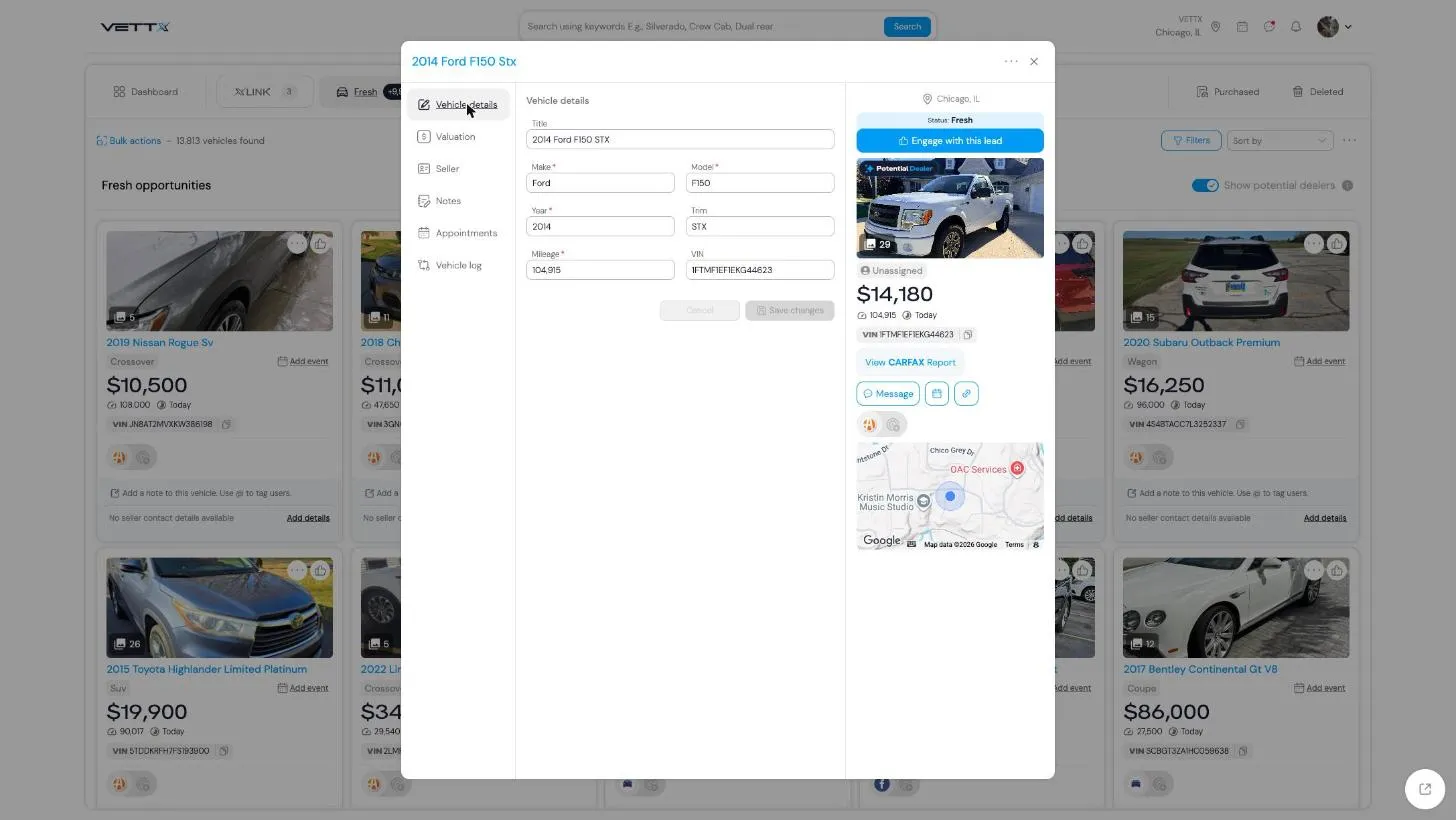
Whatever the stage, a buyer asks the same things: what is it, what's it worth, who's selling, what did we say, when are we seeing it, what happened so far. If the screen changed shape with every stage, buyers would relearn it with every car.
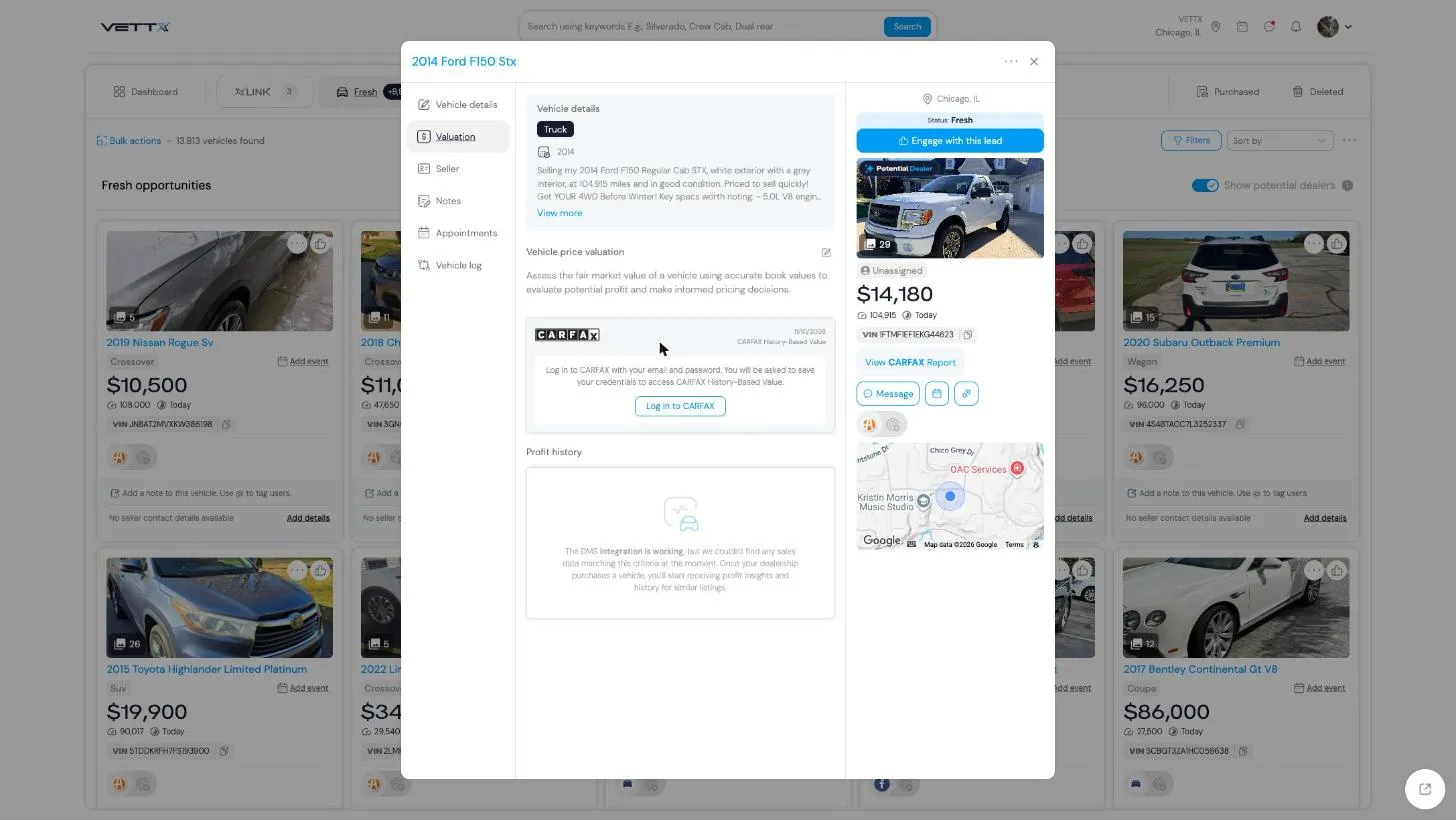
I fixed the structure instead: Vehicle details, Valuation, Seller, Notes, Appointments and Vehicle log, always in that order, always in the same place. The price, VIN, map and the "Engage with this lead" action stay pinned on the right.
Same tabs in Fresh, In the Works, Ready to Sell, Purchased and Deleted. A buyer learns the modal once and uses it on every car they will ever touch.
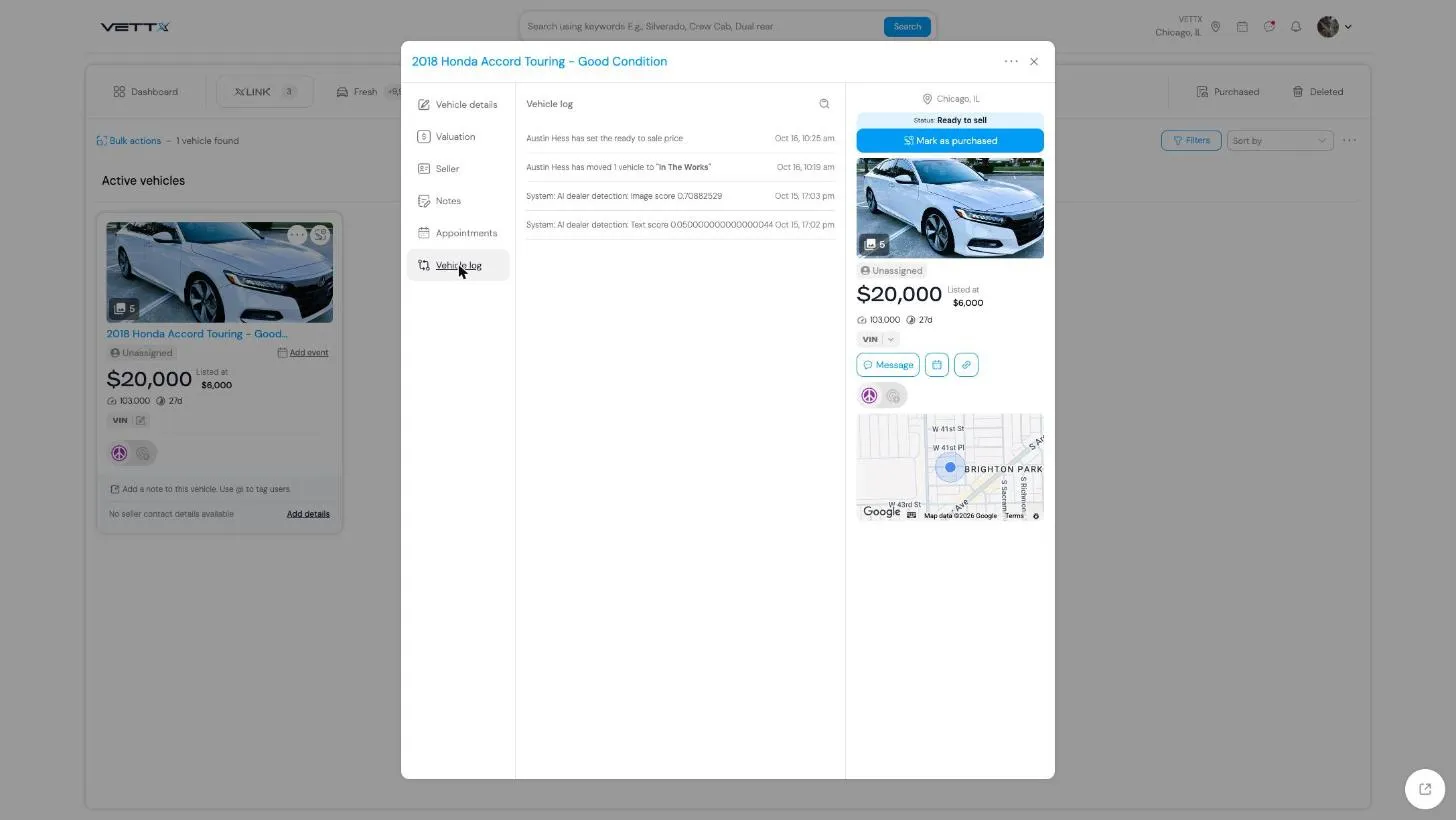
Buyers were wasting calls on sellers who turned out to be other dealers. Filtering them out automatically looked like the easy fix. But detection is a score, not a fact, and a wrong guess silently hides a good car.
So the system scores photos and text, marks likely dealers with a Potential dealer badge, and leaves a Show potential dealers switch in the buyer's hands. The reason for every flag is written in the vehicle log.
The AI informs, the buyer decides. The same rule shaped Vettx Copilot, below.
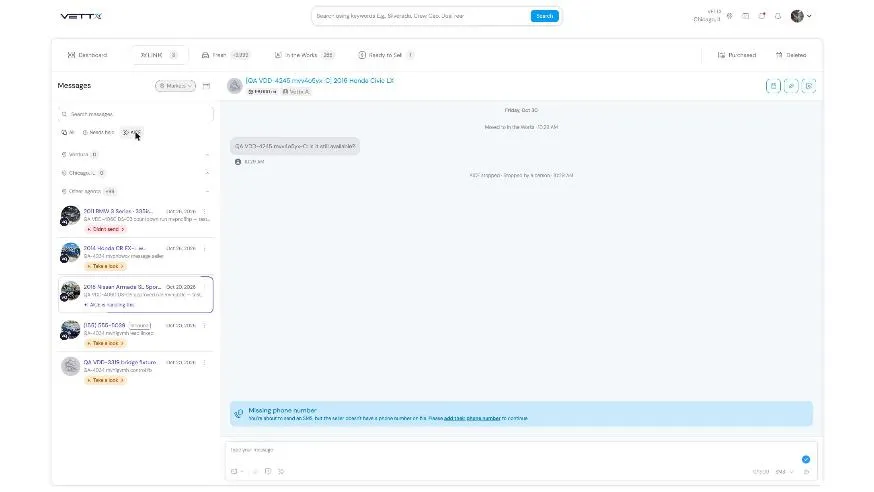
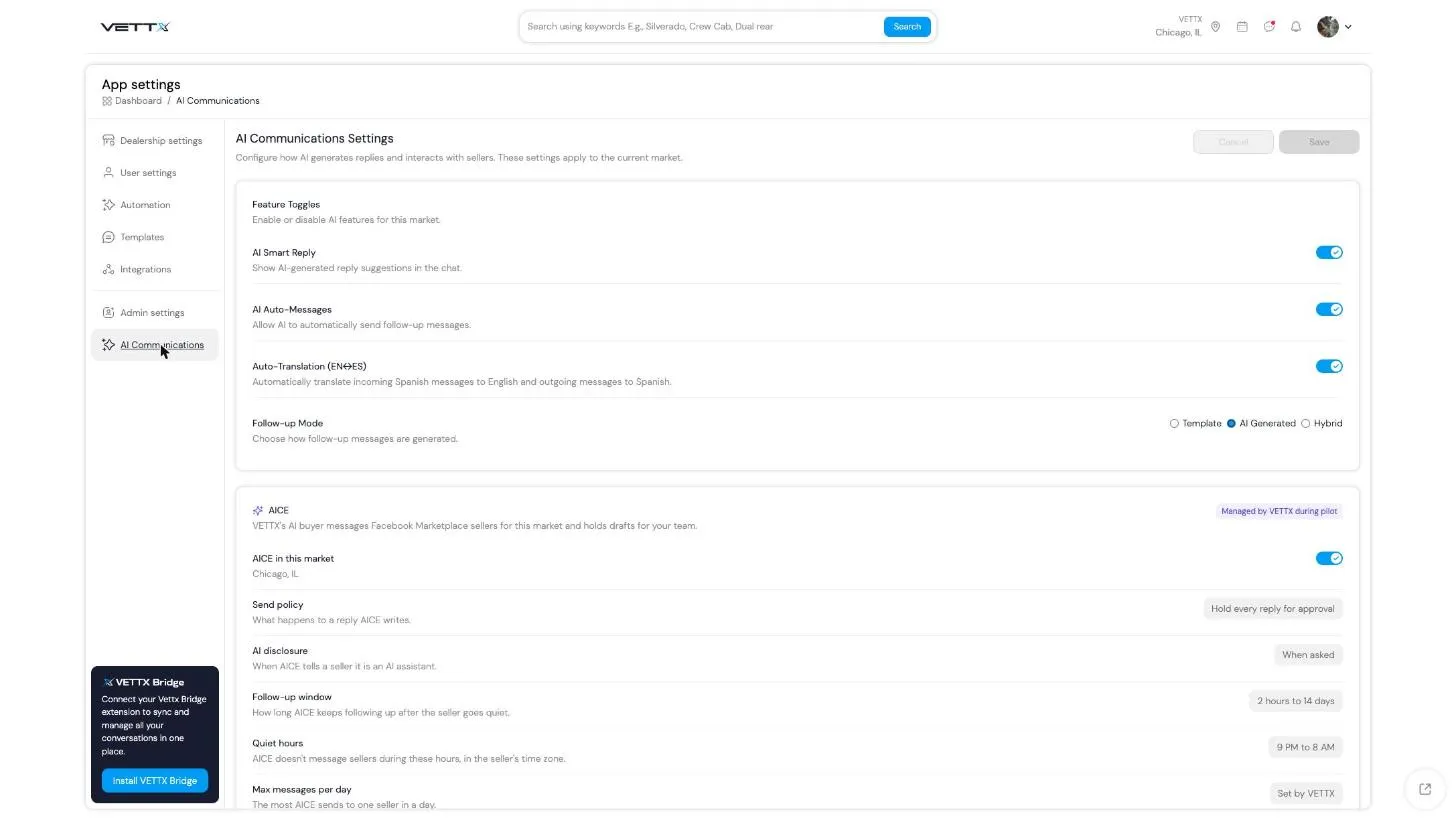
On Marketplace the first dealer to reply usually wins the car. No team can answer hundreds of sellers at 9 PM. Vettx Copilot, the AI buyer, messages sellers and drafts every follow-up. The hard part wasn't the AI. It was deciding how much rope to give it.
The defaults do the trust work:
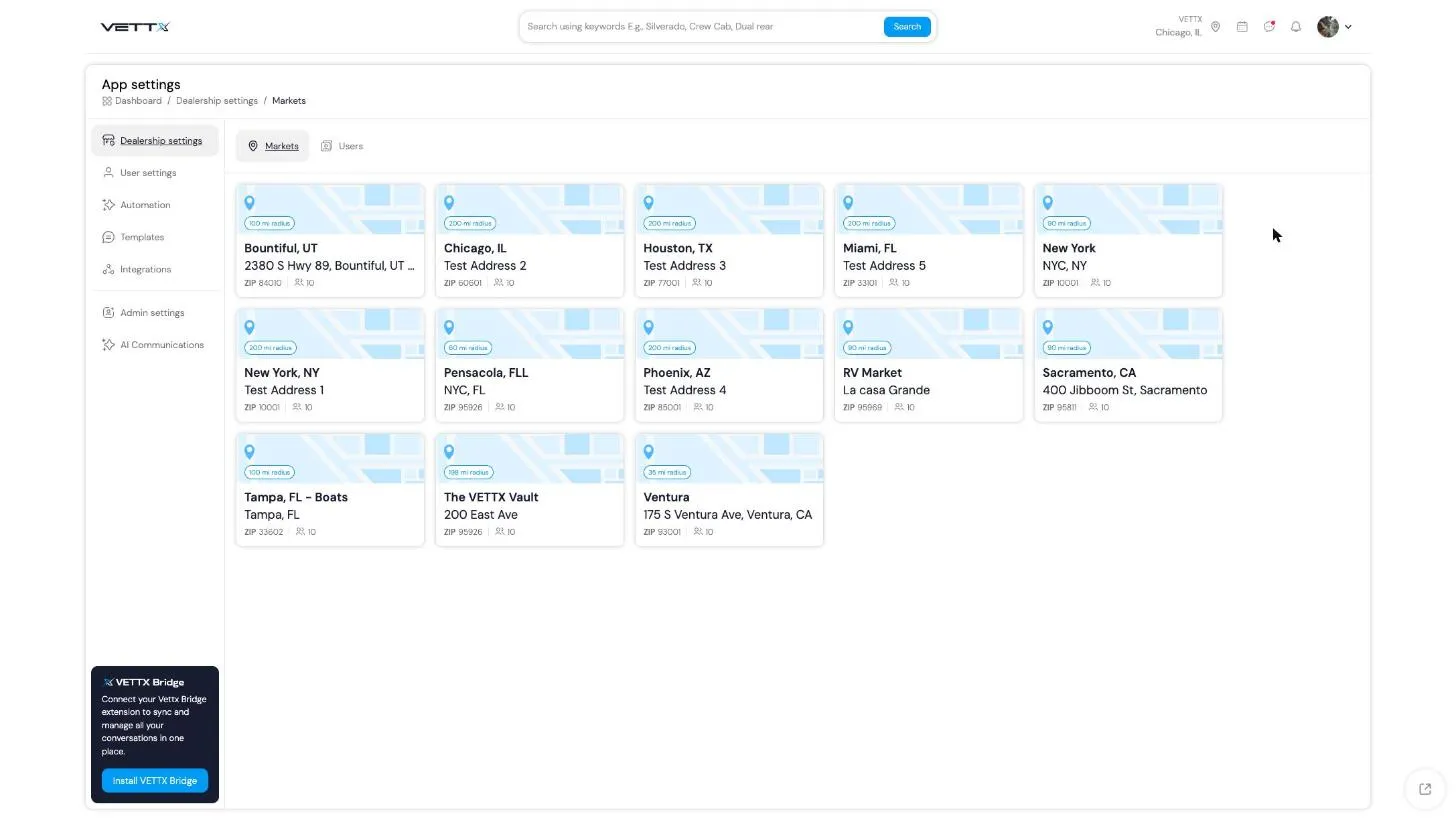
The first version assumed one dealership in one city. Then groups arrived with buyers in several markets, boats next to cars and people who needed to see some markets but not others. Patching permissions per user would have collapsed fast.
I made the market the unit: its radius, what gets pulled in, who works it and what's excluded. A manager answers "who buys where" in one screen.
As Head of Product Design, quality couldn't depend on me reviewing every pixel. Three things changed how we worked:
As Product Experience Manager the question widened again, from "is this screen right?" to "does the team ship what it promises?" That question became its own case study.
Dealer groups run a daily buying routine on Vettx: check Fresh, work the conversations, move cars forward.
The leading private-party acquisition software in the industry.
Vettx Copilot and templates cut the time between "listed" and "first message".
Pipeline, search, messaging, automation, integrations and AI admin, all speaking the same patterns.
“He is insanely talented in designing powerful UI/UX that gets users engaged and excited. But what really sets him apart is his work ethic and extreme empathy, which gives him the ability to take a concept and turn it into reality. A beautiful reality.”
“Gerardo is proactive, receptive to feedback and constantly looking to create solutions to maintain and improve customer satisfaction. He’s been a key part of countless updates and improvements to our software.”